

Most backyard excavation jobs in Melbourne run between $1,500 for a small landscaping dig and $8,000 for a full pool excavation, once you combine machine hire, tip truck and disposal into one price. The single biggest swing factor isn’t the digger, it’s spoil disposal, tight access, or hitting rock. Before anything else, call Dial Before You Dig on 1100 to check for underground services.
TL;DR:
- Excavation costs in Melbourne vary widely based on site access, soil conditions, and spoil disposal, with typical prices ranging from $800 for small garden beds to $8,000 for full pool excavations.
- Tighter access, rocky ground, or complex soil conditions significantly increase costs, especially when hydraulic hammers or smaller machines are required, doubling or tripling base estimates.
- Homeowners should estimate total costs by calculating volume, converting to tipper loads, estimating machine hours, and adding disposal and mobilization fees, then request a single combined quote for clarity.
- Proper site preparation involves mandatory checks with Dial Before You Dig to locate underground services, and permits or asbestos testing may be necessary, adding to overall costs if applicable.
- Contractors should provide detailed quotes with line items for machine and operator rates, truck and disposal fees, rock-breaking contingencies, and mobilization to ensure accurate comparison and avoid hidden charges.
Table of Contents
- What Does Excavation Cost in Melbourne for Common Backyard Jobs?
- What Affects Excavation Costs in Melbourne?
- How Much Does Excavation Cost Per Hour in Melbourne?
- How to Estimate Your Excavation Cost Before You Call a Contractor
- Permits and Safety Checks You Can’t Skip in Victoria
- How to Get and Compare Excavation Quotes Properly
- How Rokworx Thinks About Excavation Costs in Melbourne
- Get a Combined Excavation Quote From a Local Melbourne Team
- Sources
- FAQ
What Does Excavation Cost in Melbourne for Common Backyard Jobs?
The range you’ll see quoted for “backyard excavation cost Melbourne” jobs is wide because the jobs themselves are wildly different. A small garden bed regrade and a below-ground pool cut both fall under “excavation,” but they don’t belong in the same sentence when it comes to price.
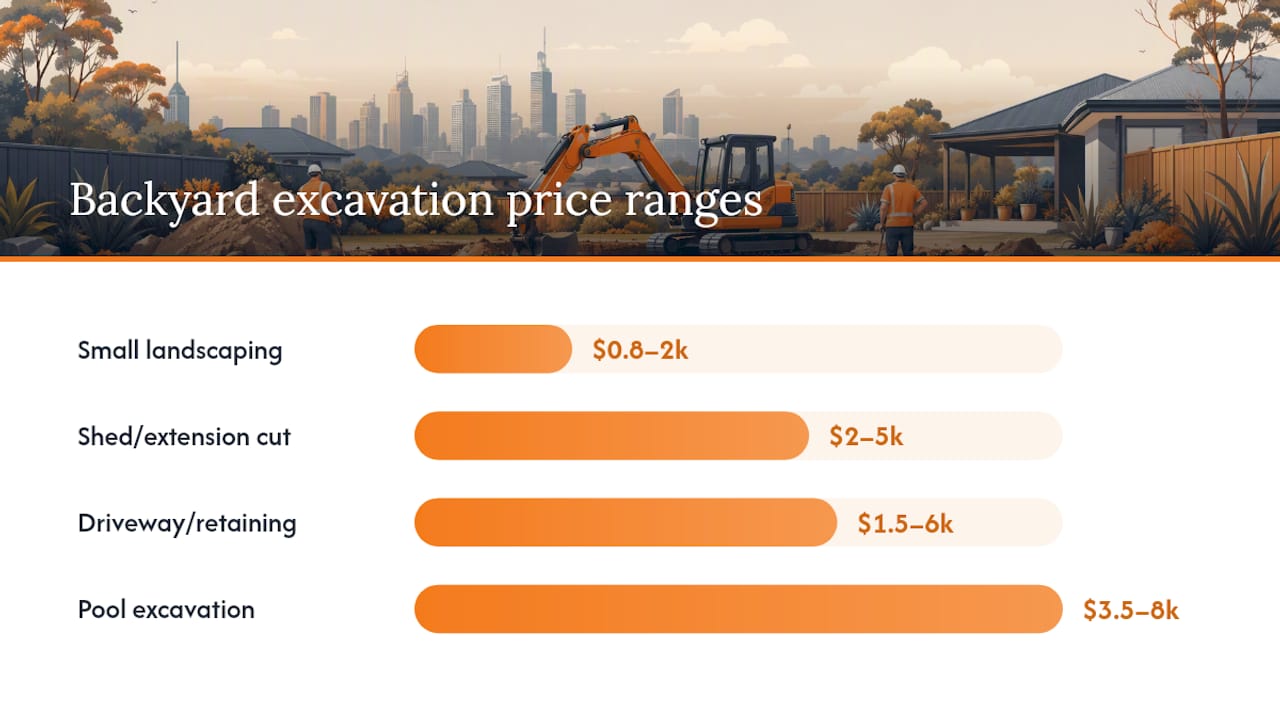
Here’s roughly what homeowners across Melbourne are paying for common jobs, based on combined pricing that includes machine, operator, tipper truck and tip fees:
- Small backyard landscaping dig (garden bed prep, minor regrading, up to a few cubic metres): $800 to $2,000
- Site cut for a shed, deck, or extension footing: $2,000 to $5,000, depending on volume and access
- Pool excavation (standard inground pool footprint): $3,500 to $8,000, varying with soil type and truck access
- Driveway or retaining wall excavation: $1,500 to $6,000, heavily influenced by how much material needs to leave site
Two scenarios show how fast these numbers move. An accessible suburban block in the outer east, with a wide side gate and clear soil, might land a pool dig at the low end of that band. A tight inner-suburb block in Fitzroy or Richmond, where a mini excavator has to be craned over a fence and the ground turns out to be basalt, can double that cost even for a similar-sized hole. Hipages’ cost guide makes the same point nationally: excavation pricing varies less by job type and more by complexity and equipment required.
Whatever quote you get, insist it bundles machine, operator, tipper truck, and disposal into a single figure. Anything less makes true comparison almost impossible.
What Affects Excavation Costs in Melbourne?
Five things move the needle on price, and most homeowners only think about one of them (the machine) until the invoice arrives.
- Site access. A gate under 900mm wide rules out most mid-size excavators, forcing a smaller machine and more hours, or a bobcat working in stages. Side access with no fence removal is the fastest and cheapest scenario.
- Soil and rock conditions. Clay and loam dig fast. Basalt and rock, common through Melbourne’s inner north and east, often demand a hydraulic hammer attachment, which adds a real hourly premium on top of standard rates.
- Volume and disposal. Spoil removal, not machine hire, is frequently the largest single line item on a bigger site cut. Reusing clean fill on site instead of trucking it to a tip can cut thousands off the total.
- Permits and underground services. A quick Dial Before You Dig check is mandatory and can reveal gas, power, or water lines that change the dig plan entirely.
- Mobilization and minimum booking time. Most contractors charge a minimum call-out, often a half-day, regardless of how small the actual job is.
Pro Tip: Ask early whether your soil can be reused as fill elsewhere on the property. A contractor who can arrange beneficial reuse instead of tipping every load saves real money on anything bigger than a small garden dig.
How Much Does Excavation Cost Per Hour in Melbourne?
Machine hire rates in Melbourne, quoted per hour with an operator, break down roughly like this:
- Bobcat / skid steer: around $95/hr, suited to small digs, garden regrading, and light site clearing
- Mini excavator (1 to 3 tonne): $120 to $150/hr, the workhorse for tight backyard access and small pool or shed footings
- Mid-size excavator (5 to 8 tonne): $150 to $220/hr, used where volume is higher but access still allows a mid-frame machine
- Large excavator (14 to 20 tonne): $280 to $400/hr, reserved for large site cuts, bulk earthworks, or where speed matters more than access constraints
These figures assume a standard operator setup. Machines fitted with GPS or telematics guidance carry a rate premium, and for a straightforward backyard dig, that precision usually isn’t necessary, so it’s worth asking your contractor whether you actually need it.
Hitting rock changes the equation regardless of machine size. A hydraulic hammer attachment adds a meaningful hourly premium on top of the base rate, and jobs in rockier pockets of Melbourne should budget for that possibility even before digging starts. Machine selection matters most when access is tight: a mini excavator working through a narrow side gate will take longer, and cost more in hours, than a mid-size machine working freely on an open block.
How to Estimate Your Excavation Cost Before You Call a Contractor
You don’t need a quantity surveyor to get a rough number before quotes start coming in. Work through it in four steps.
- Calculate the volume. Measure length × width × depth in metres to get cubic metres. A 4m x 3m pool cut, 1.5m deep, is 18 cubic metres of spoil.
- Convert to tipper loads. A standard tipper truck carries roughly 6 to 8 cubic metres per load, so that 18 cubic metre dig needs about 2 to 3 truck runs.
- Estimate machine hours. A mini excavator on an accessible site typically clears that volume in 4 to 6 hours; add more for tight access or rock.
- Add disposal and mobilization. Multiply machine hours by the relevant hourly rate, add tip fees per load, then add a half-day minimum call-out if that applies.
Once you have a rough figure, ask contractors for one combined price covering all of it rather than a per-hour estimate you have to piece together yourself.
Permits and Safety Checks You Can’t Skip in Victoria
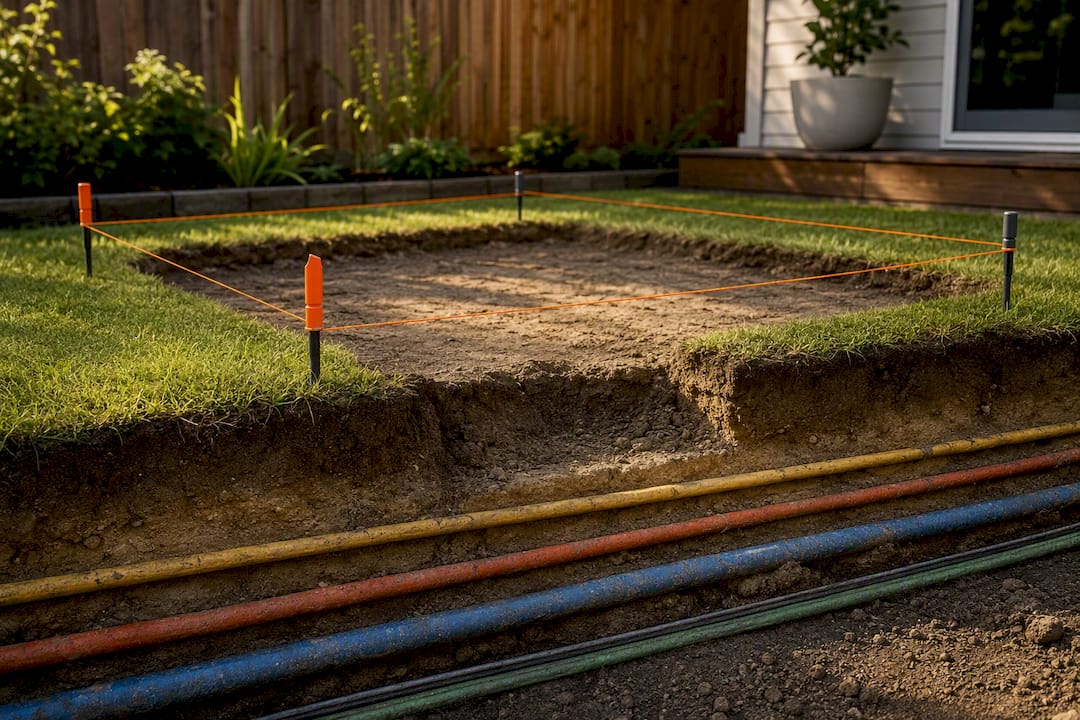
Every excavation project in Victoria starts with the same non-negotiable step: contacting Dial Before You Dig on 1100 to identify gas, power, water, and telecommunications lines before the first scoop. Skipping it risks not just a damaged service, but personal injury and liability for the homeowner.
Older properties, particularly those built before the 1990s, sometimes require contamination or asbestos testing before excavation begins, which adds cost but is not optional if there’s any reasonable suspicion. Confirm your contractor carries public liability insurance and disposes of spoil through an EPA-compliant facility, not an informal dump site.
How to Get and Compare Excavation Quotes Properly
A quote that only lists an hourly machine rate is half a quote. Insist on these line items before comparing anything:
- Machine and operator rate, with machine size specified
- Tipper truck and disposal fees, including number of loads estimated
- A rock-break contingency rate, even if you don’t expect to need it
- Mobilization or minimum call-out charge
- Site reinstatement, if fencing or paving needs to go back afterward
Red flags worth walking away from: a quote dramatically lower than others with no explanation, vague wording around “spoil removal as required,” no mention of Dial Before You Dig, and no evidence of insurance. Ask each contractor for one fixed combined price rather than a per-hour breakdown. It’s the only way to compare apples to apples.
How Rokworx Thinks About Excavation Costs in Melbourne
Rokworx builds excavation quotes the way homeowners actually need them, combined, not itemized into confusing pieces. Our site leveling and soil removal guides reflect real Melbourne pricing patterns, not national averages.
— MYBMC
Get a Combined Excavation Quote From a Local Melbourne Team
Some companies handle the entire backyard excavation job under one roof: excavation and site cuts, spoil removal, rock supply, and the retaining wall or landscaping work that usually follows. This approach can help avoid cost blowouts that sometimes occur when multiple contractors are involved.
Instead of chasing separate quotes for a digger, a tipper truck, and a landscaper afterward, you get one combined quote covering machine, operator, disposal, and site prep, from a team that also supplies the rock and materials for whatever comes next, whether that’s a retaining wall, a driveway, or a full backyard reset. If your site has tight access or rocky ground, our tight access excavation guide walks through what that means for machine choice and price before you even book a site visit. Get in touch for an on-site assessment and a fixed combined price, no separate invoices to reconcile afterward.
Sources
This guide draws on rate data and job examples from The Quote Yard, Hipages, and local pricing breakdowns from Zero Waste Services. For deeper detail, see Rokworx’s guide to soil removal costs.
- Excavation and earthmoving VIC — The Quote Yard
- How much does excavation cost? 2026 — Hipages
- Excavator hire rates in Melbourne — iSeekPlant (blog)
FAQ
How Can I Estimate the Cost of Excavation?
Measure your dig area in metres, multiply length by width by depth to get cubic metres, then estimate machine hours based on access and soil type. Multiply hours by the relevant hourly rate, add tip fees per truck load, and factor in a mobilization charge. Most Melbourne contractors will refine this into a fixed combined quote once they see the site.
How Much Does a 10-Metre Retaining Wall Cost to Excavate?
Excavation for a retaining wall typically falls within the $1,500 to $6,000 range, depending on wall height, soil type, and how much spoil needs removal. Rocky ground or tight side access pushes costs toward the top of that band. Rokworx’s retaining wall excavation guide breaks down how depth and batter angle affect the dig volume.
How Much Does It Cost to Remove Soil per Cubic Metre in Melbourne?
Soil removal costs vary with tip fees, truck access, and distance to disposal sites, and pricing is best confirmed as part of a combined excavation quote rather than a standalone per cubic metre rate. Reusing clean fill on site instead of trucking it away is often the biggest cost saver available. See Rokworx’s soil removal pricing guide for a full local breakdown.
How Much Is Excavation per Cubic Metre?
There’s no single flat rate per cubic metre in Melbourne, since cost depends on machine size, access, soil type, and disposal distance. A better way to budget is to convert your project’s volume into estimated machine hours and tipper loads, then price each against current hourly machine rates, which range from around $95/hr for a bobcat to $400/hr for a large excavator.
Do I Really Need to Call Dial Before You Dig for a Backyard Job?
Yes, every excavation project in Victoria, including small backyard digs, requires a Dial Before You Dig check on 1100 before work starts. It’s free, takes a few minutes, and identifies gas, power, and water lines that could otherwise turn a routine dig into an expensive, dangerous mistake.


8 Comments
ole99link
Straightforward and honest platform. No hidden fees or complicated rules. Just a great place to enjoy some games ole99link
reliefmedspharma
Order Pure Molecule relief Meds Canada ✅
gunnersmart
Buy Sophisticated Hand Guns Now
champion-bulldoggen
Champion-Europäische Bulldoggenwelpen zur Adoption
taktikwacht
Kaufen Sie diskret die besten Handfeuerwaffen in Europa
puremoleculelabs
https://puremoleculelabs.com Molecular Labs
ketamight
https://ketamight.com – Order Ketamine
ph77pinas
I’ve been playing here for a few weeks now and the payouts are surprisingly fast. Definitely one of the most reliable platforms I’ve found recently. Check out ph77pinas for a great experience.