

The fastest way to source coastal garden rocks in Melbourne is to walk a display yard and see the stone under real daylight, then bring in a local contractor supplier once you know the material and volume you need. This matters because photos flatten color and scale, and salt-prone sites need dense stone like granite or basalt, not soft sandstone that breaks down over time. For anything beyond a bag or two, call a supplier like Rokworx, describe your site, and ask for a quote before you commit to a load.
TL;DR:
- Dense granite or basalt resist salt spray and weathering, making them the best choices for coastal gardens near Melbourne, especially in exposed sites.
- Seeing rocks in natural daylight and inspecting samples on-site helps prevent color and scale mismatches that often occur with photos.
- For large structural elements, site access and proper base preparation are critical; a problematic driveway or poor excavation can turn a straightforward job into a costly challenge.
- Suppliers typically sell by cubic meter, tonne, or bag, so measuring your site accurately and clarifying delivery access helps avoid logistical issues.
- Installing simple features like groundcover pebbles or single boulders suits DIY projects, but structural walls and slopes require professional earthmoving and engineering.
Table of Contents
- Where to Find Coastal Garden Rocks Melbourne Buyers Can Trust
- What Stone Types Hold Up Best Near the Coast?
- How Do You Choose the Right Size, Color, and Quantity?
- What Should You Check Before Delivery Day?
- Should You Install It Yourself or Call a Contractor?
- How Long Do Coastal Garden Rocks Last With Proper Care?
- What Local Knowledge Actually Changes on a Melbourne Job?
- What Melbourne Homeowners Get Wrong About Coastal Rock Gardens
- Get Coastal Garden Rocks Supplied and Installed by Rokworx
- Sources
- FAQ
Where to Find Coastal Garden Rocks Melbourne Buyers Can Trust
Melbourne has four practical sources for garden rock, and each suits a different job. Display yards work best when you want to hand-pick large feature boulders or retaining stone, because you can walk the yard and see exactly what you’re getting. Transrock runs a family-operated yard in Victoria built around this idea, with a wide range on hand for customers to inspect before buying.
Wholesale and quarry outlets suit bulk orders where consistency matters more than picking individual pieces, and they typically quote by the tonne or cubic meter. Garden centres carry bagged pebbles and smaller decorative stone for topping up beds or edging a path, and they’re the quickest option if you only need a trailer load.
Specialist pebble suppliers fill the gap for polished or tumbled stone used in courtyards and water features. Pebbles Inc stocks decorative garden pebbles in bagged form with Melbourne wide delivery, which suits smaller residential jobs that don’t justify a bulk order.
Before you order, ask suppliers:
- What size range is available for this stone type, and can I see samples?
- Is pricing per cubic meter, per tonne, or per bag?
- What’s the delivery lead time and minimum order for free delivery?
- Can I visit the yard to check color and texture in person?
Seeing rock in natural light avoids the classic mismatch where a stone looks warm gray online and turns out blue black on site. Outdoor Design’s coverage of Transrock makes exactly this point: photographs rarely capture the true variation in size, shape, and color across a batch of natural stone.
What Stone Types Hold Up Best Near the Coast?
Density is the deciding factor for any coastal-style garden, whether you’re in Frankston, Mornington, or an inland suburb chasing the coastal look. Granite and dense basalt resist salt spray and weathering because their low porosity stops moisture and salt crystals from working into the stone’s surface. Wicki Stone’s guide to coastal landscape materials names granite specifically as a top-tier choice for exposed coastal conditions, largely because it needs almost no ongoing maintenance once placed.
Mudstone and tumbled river pebbles bring the warm, sandy tones most people associate with a beach garden, and they work well for groundcover, dry creek beds, and pathway edging.
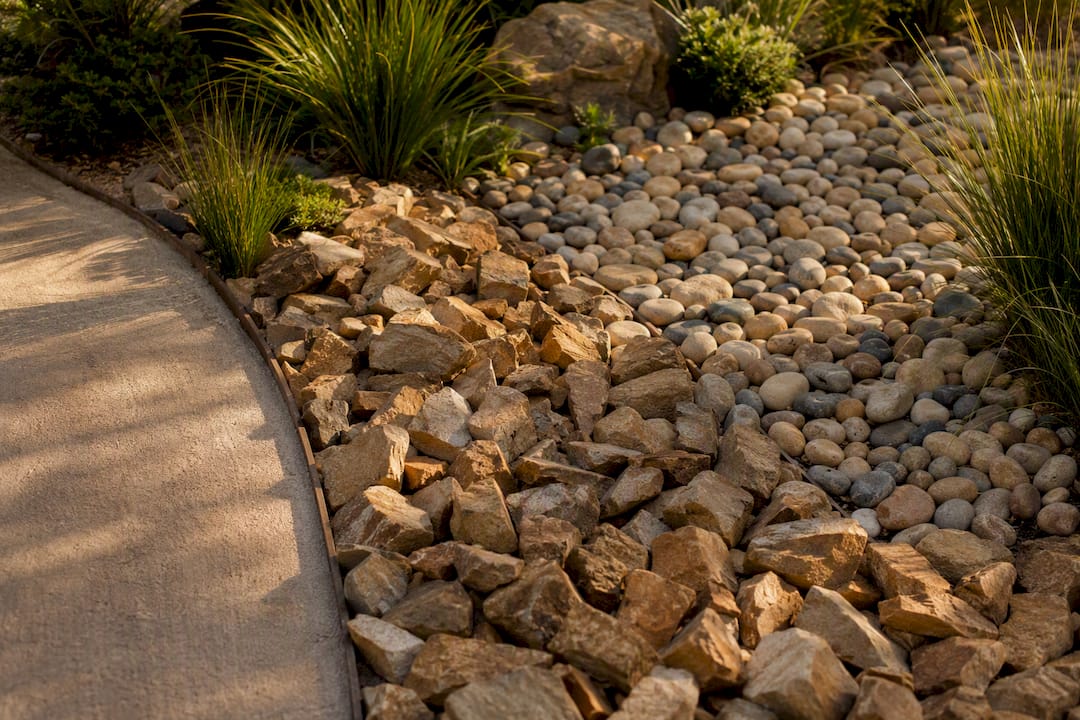
Pro Tip: If you love the look of sandstone or limestone but your site cops direct salt spray, ask about sealing before you buy. Sealed sandstone can perform acceptably in coastal zones, but only with regular resealing, and skipping that step shortens its life fast.
Quick reference for coastal durability:
- Granite and dense basalt: low porosity, minimal maintenance, best for exposed sites
- Mudstone and river pebbles: good color and texture, moderate durability
- Sandstone and limestone: attractive but porous, needs sealing near salt spray
Dense igneous stone like granite and basalt resists salt-driven weathering far better than softer sedimentary rock, according to Wicki Stone’s material comparison, which is why most Melbourne coastal gardens lean heavily on those two materials for anything structural.
How Do You Choose the Right Size, Color, and Quantity?
Matching stone to purpose keeps a coastal garden looking intentional instead of scattered. Use this rough sizing guide when you’re planning a job:
- Large boulders (300mm and up) for retaining structures and standalone focal points near an entry or garden bed.
- Medium stones (100 to 300mm) for edging beds, defining pathways, or clustering as a feature grouping.
- Pebbles (7 to 20mm) for groundcover, drainage layers, and filling gaps around plantings, with natural rustic river pebbles in the 20 to 60mm range a common choice for pathways that also need good drainage.
Color should echo your plant palette and any existing hardscape. Grey basalt suits a minimalist native planting, while warmer mudstone tones pair naturally with silver foliage like coastal rosemary or saltbush. Always view a sample outside, since indoor lighting shifts stone color noticeably.
For quantity, suppliers usually sell by cubic meter or tonne rather than by the piece. Before you call, measure your area’s length, width, and desired depth in meters, since that gives a supplier enough to calculate volume and weight instantly. A general rule is that a cubic meter of pebbles at a moderate depth can cover a substantial area, though exact coverage varies by stone size and density.
What Should You Check Before Delivery Day?
Heavy rock deliveries can go wrong fast if a truck can’t reach your drop point. Most suppliers use tipper trucks or flatbeds for bulk loads, and many inner Melbourne driveways simply can’t take one.
- Confirm with the supplier whether your street and driveway can fit their standard delivery vehicle.
- Ask if a smaller truck-and-trailer setup is available for tight-access jobs.
- Clear a flat, accessible drop zone away from garden beds, paving you want to protect, and overhead power lines.
- Lay boards or plywood over lawn areas the truck might cross to avoid rutting.
Pro Tip: Tell the supplier your access constraints and desired placement spot when you request a quote, not after the truck arrives. Some Melbourne properties need a smaller truck-and-trailer combo rather than a full-size tipper, and knowing that upfront saves a wasted trip.
If a job needs the rock moved further than the truck can reach, or the site needs grading first, that’s when earthmoving support becomes worth booking alongside delivery rather than after the fact.
Should You Install It Yourself or Call a Contractor?
Simple jobs suit a confident DIYer. Spreading pebble groundcover, edging a garden bed with medium stones, or placing a single feature boulder on flat ground are all manageable weekend tasks.
Structural work is a different story. Anything load-bearing, on a slope, or tied into drainage needs proper excavation, base compaction, and often engineering input to avoid future failure. Retaining walls in particular carry real risk if the base isn’t prepared correctly, since a poorly compacted footing can shift or collapse within a few seasons.
- DIY-friendly: pebble groundcover, simple edging, single feature boulders on flat ground
- Contractor territory: retaining walls, sloped sites, large boulder placement, anything needing drainage integration
Getting the foundation prep and compaction right early matters more than the stone choice itself for anything structural, since Melbourne’s clay-heavy soils punish shortcuts on drainage and base work.
How Long Do Coastal Garden Rocks Last With Proper Care?
Quarried stone almost always arrives dusty, so give it an initial wash to reveal its true color, particularly with tumbled or polished pebbles that look dull until cleaned. After that, a periodic rinse helps reduce salt buildup on stone near direct sea spray.
Weed control matters more than most people expect. A weed membrane under pebbles or a solid edging border stops grass and weeds from working through gaps, which saves hours of pulling weeds out from between rocks later.
- Wash new stone on arrival to remove quarry dust
- Rinse periodically in high salt-exposure areas
- Lay a weed membrane before placing pebbles or edging stone
- Reseal porous stone like sandstone every few years if it’s near salt spray
Dense granite and basalt need essentially no resealing and can last decades outdoors, while sealed sandstone performs acceptably in coastal zones only with that regular maintenance built in. Skip the sealing and porous stone will show salt staining and surface breakdown well before its denser counterparts.
What Local Knowledge Actually Changes on a Melbourne Job?
Some local suppliers based in Melbourne offer site assessments in person rather than over a phone call. That distinction matters most on jobs with slopes, tight driveway access, or large boulders that need machinery to place safely.
A site visit typically gets recommended when:
- The garden has a noticeable grade change that affects drainage or wall footing
- Large boulders need repositioning after delivery
- Truck access is uncertain from street view alone
- The job combines rock supply with earthmoving or excavation
For homeowners planning the visual side first, the rock wall ideas gallery and the placement guide offer a practical starting point before any quote conversation, since seeing finished layouts helps narrow down stone type and scale faster than describing it over the phone.
What Melbourne Homeowners Get Wrong About Coastal Rock Gardens
Most guides treat rock choice as the whole decision, when the real failure point on Melbourne coastal-style gardens is almost always access and base prep, not the stone itself. A homeowner picks a beautiful mudstone boulder from a photo, discovers on delivery day that the truck can’t reach the backyard, and ends up paying for a second handling job that could have been avoided with one phone call beforehand.
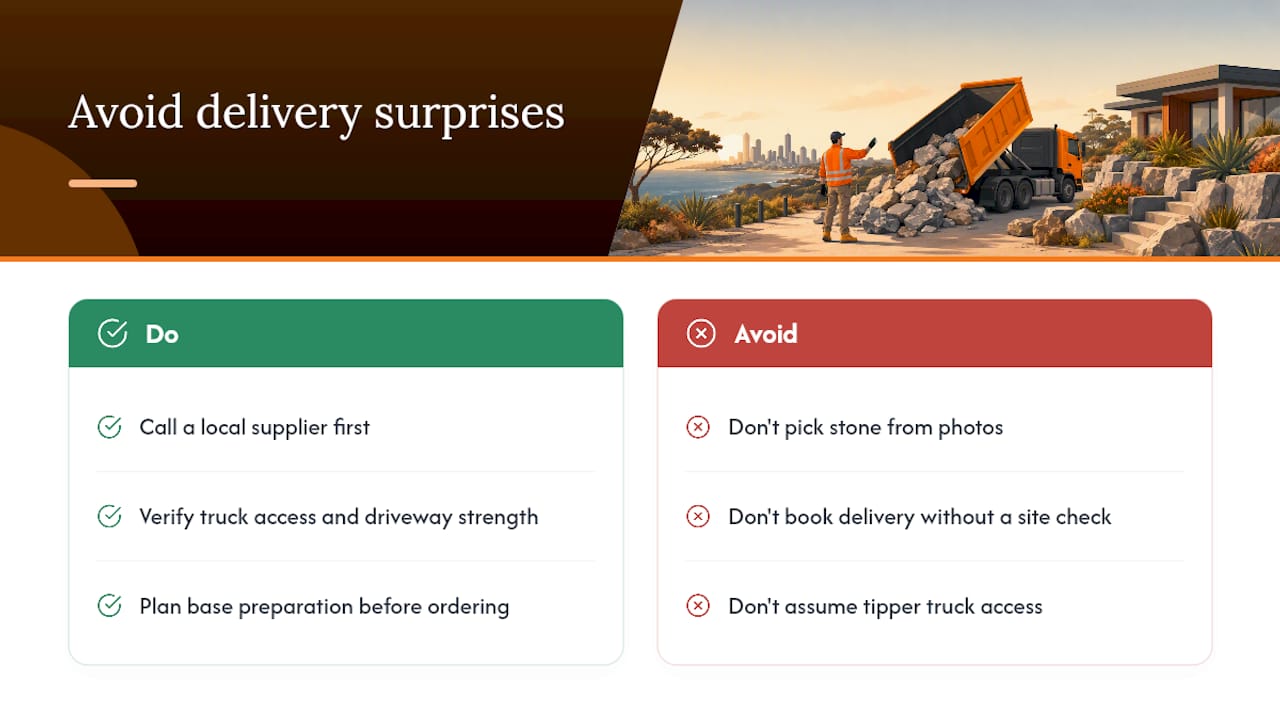
The conventional advice to “pick durable stone” is correct but incomplete. Granite and basalt earn their reputation for a reason, but a driveway that can’t take a tipper truck turns even the right stone into a logistics problem. Site access deserves the same attention as material selection, not an afterthought once the load is already booked.
If there’s one thing to prioritize first, it’s talking to a local supplier about your specific site before falling in love with a particular rock. Melbourne’s mix of narrow inner suburban streets and sloped outer blocks means the same stone that’s a simple delivery in one postcode can require a smaller truck and extra handling in another.
— MYBMC
Get Coastal Garden Rocks Supplied and Installed by Rokworx
There are companies that supply granite, basalt, and coastal-friendly stone direct to Melbourne properties and may handle earthmoving, site prep, and installation in a single job to avoid coordinating multiple trades for one garden.

If you’re picturing a retaining wall or a full rock feature rather than a scattering of pebbles, our retaining walls Melbourne page walks through structural options, and the granite rock supply page covers what’s available for larger installations. For sites with slopes or access issues, our excavation guide explains what prep work typically comes first.
Browse the gallery for real project examples, then get in touch through Rokworx to arrange a site visit or request a quote for your project.
Sources
- The Best Stone Types for Coastal Landscapes – Wicki Wholesale Stone, Inc.
- Guide to Coastal Landscape Materials | Cedar Bridge
- Outdoor Design: Transrock feature
FAQ
Where can I find large garden rocks in Melbourne?
Display yards like Transrock let you inspect large boulders in person before buying, which is the most reliable way to check size and color match your site. Some suppliers source and deliver large rock direct to properties after a site assessment.
Where can I buy rocks for a rockery?
Wholesale yards and quarry suppliers are best for rockery projects since you’ll typically need a mix of medium and large stone at bulk pricing. Ask your supplier for a range of shapes rather than uniform pieces, since natural variation is what makes a rockery look authentic.
Where can I buy rocks for garden edging?
Garden centres and bagged suppliers work well for smaller edging jobs, while a bulk supplier makes more sense for edging an entire property boundary. Our garden rock edging guide covers stone sizing and layout for Melbourne gardens specifically.
What are some low-maintenance gardens with rocks?
Groundcover beds using 7 to 20mm pebbles over a weed membrane, paired with drought-tolerant coastal plants, need almost no ongoing upkeep beyond an occasional rinse. Combining granite or basalt feature boulders with pebble groundcover gives a coastal look that holds up for years without resealing or replacement.


5 Comments
shihtzulieblinge
Reinrassige Shih-Tzu-Welpen europaweit adoptieren🐶
schaeferhundblutlinien
Reinrassige Deutsche Schäferhundwelpen europaweit verfügbar 🐕🦺
ragsiamglanz
Ragdoll-, Siam- & Ragamese-Kätzchen europaweit🐱
papageienparadies
Europas Premium-Papageien aus Hausaufzucht 🦜
imperiumvans
Own the Road. Command the Water