

Most landscaping earthmoving beyond a shallow garden bed belongs with a licensed operator, not a rented mini digger. Anywhere excavation passes 1.5 meters, involves underground services, or shifts serious volumes of soil or rock, contractors who work to a Safe Work Method Statement and carry the right insurance, such as Rokworx, are the safer and often cheaper route once you count spoil disposal and machine hire. Before anything else, measure your access and get a Dial Before You Dig plan.
TL;DR:
- Excavation work beyond a shallow garden bed should generally be done by licensed operators, especially for depths over 1.5 meters, near underground services, or with large volumes.
- The appropriate machine depends on site access, with mini excavators for tight spaces, skid steers for finishing, and larger excavators or dozers for bulk work, plus attachments like rock breakers or augers.
- DIY earthmoving is suitable only for shallow work under 300 mm, with regulated projects requiring a SWMS, insurance, and verification of underground service locations.
- Spoil disposal costs can constitute up to half of a small project’s expenses, but reusing clean fill and staged work can significantly reduce costs.
- A thorough quote should include SWMS, license proof, spoil plan, and clarity on all fees, with red flags including missing safety documentation or unverified underground service plans.
Table of Contents
- What counts as earthmoving in a landscaping project
- Matching machines and attachments to the job at hand
- Deciding between DIY and hiring a professional
- Safety and rules you need to know before you dig
- Planning your site and budgeting for the real cost drivers
- Choosing a contractor and reading a quote properly
- Rokworx and what compliant earthworks look like in practice
- What tradespeople wish homeowners knew before digging
- How Rokworx can help with your next earthworks project
- Where to check the rules and current pricing
- Sources
- FAQ
What counts as earthmoving in a landscaping project
Earthmoving for landscaping covers a wider range of work than most homeowners expect. It includes site cuts to create level pads, grading to fix drainage falls, trenching for irrigation or stormwater pipes, dam or pool excavation, land clearing ahead of planting, and cutting benches into a slope to prepare for a retaining wall. Each scope maps to a different outcome: trenching solves waterlogging, grading creates usable lawn or planting beds, and bench cutting sets up a stable base for terraces.
Some tasks quietly escalate a simple job into a regulated one. Watch for these triggers:
- Trenches or cuts deeper than 1.5 meters, which shift the work into high-risk territory
- Digging near gas, water, power, or telecommunications lines
- Spoil that turns out to be contaminated, rocky, or unexpectedly heavy clay
- Retaining wall excavation on a slope steep enough to risk collapse
Getting the scope right before you call anyone avoids a quote that misses half the job, and a retaining wall excavation guide is worth reading if a wall is part of the plan.
Matching machines and attachments to the job at hand
The right machine depends more on access than on the size of the job. A tight side gate rules out anything but a compact mini excavator, while an open backyard opens up faster, heavier options.
- Mini excavators suit tight access, garden bed cuts, and small trenching where a standard machine simply will not fit through the gate.
- Skid steers and bobcats handle loading, spreading, and leveling once material is already on-grade, making them useful for finishing work.
- 12-tonne excavators or small dozers are built for bulk cut-and-fill, dam excavation, or large site cuts where speed matters more than finesse.
Attachments change the cost picture quickly. A rock breaker adds a meaningful hourly premium the moment you hit sandstone or old concrete footings, an auger speeds up post holes for fencing tied to a landscaping job, and a compactor is often necessary before laying pavers or a driveway base. Wet hire (machine plus operator) is the norm for anything regulated, while dry hire suits confident DIYers on shallow, service-free digs. Most operators charge a minimum call-out, plus a float fee to move the machine to site.
Pro Tip: Ask for the float fee and minimum hire period upfront, since a two-hour job can end up billed as a half-day.
Deciding between DIY and hiring a professional
The decision usually comes down to depth, services, and volume, not confidence with a shovel.
- DIY-appropriate: shallow garden bed prep, small trenching under 300 mm for drip irrigation, spreading delivered soil or mulch by hand or with a rented mini digger on a clear, service-free patch.
- Better hired out: anything over 1.5 meters deep, work within a meter of a marked utility, dam or pool excavation, and large-scale grading that needs a licensed operator and a SWMS on file.
- Cost trade-off: dry-hiring a mini excavator yourself can look cheaper per hour than wet hire, but a slower, less experienced dig often costs more once you add spoil disposal, a wasted day, or damage from an unmarked line.
If your project includes a retaining wall or tight side access, a tight access excavation guide is a useful reality check before you commit to doing it yourself.
Safety and rules you need to know before you dig
Excavation deeper than 1.5 meters is classed as high-risk construction work under the Model Code of Practice for excavation, which typically requires a written SWMS before work starts. The same threshold applies whenever a trench or cut sits near underground services, regardless of depth.
Before any digging:
- Lodge a Dial Before You Dig plan, then treat it as a starting map rather than a guarantee, since on-site potholing or vacuum excavation is still needed to confirm exact service depth and location.
- Check whether your disturbed area triggers an Erosion and Sediment Control Plan, generally required once disturbance falls in the 250 to 2,500 square meter range, and stockpile topsoil separately for reuse.
- Confirm the contractor holds the relevant state building license, such as a QBCC license where the work requires one, along with current insurance and, for larger jobs, NATA-accredited soil or compaction testing.
Planning your site and budgeting for the real cost drivers
A short pre-start checklist saves most of the headaches: measure gate and driveway width for machine access, mark trees and root zones to protect, confirm slope and soil type, and check whether council approval or a neighbor notification applies to your disturbed area.
Cost is driven by machine size, spoil volume, and ground conditions more than by the size of the finished garden bed. As a general guide, a mini excavator with an operator runs in a typical hourly price range seen in Queensland fees, a standard 12-tonne excavator in a typical hourly price range seen in Queensland fees, and spoil disposal typically costs within the range of $40 to $80 per cubic meter. Rock breaking adds a further premium on top of the base hourly rate. Spoil handling alone often makes up 30 to 50% of a small residential job’s total cost, which is why reusing clean fill on-site is one of the most effective ways to cut the bill.
- Reuse clean spoil for backfill or garden mounding instead of trucking it away
- Stage the work across smaller sections to spread cost and reduce idle machine time
- Clear access paths in advance so the operator spends less time on setup and float
A local backyard excavation cost guide shows how these ranges play out on real residential jobs.
Choosing a contractor and reading a quote properly
A solid quote leaves nothing to guesswork. Before signing off, ask for:
- A copy of the contractor’s SWMS and proof of current license and insurance.
- A plant list showing exactly which machines will be on-site and for how long.
- A spoil disposal plan stating where excess material goes and who pays for tipping fees.
- References or examples of similar completed jobs.
- Written clarification of what is included: float charges, fuel, attachment hire, and a contingency line for unexpected rock.
Treat a few things as immediate red flags: no mention of Dial Before You Dig verification, no SWMS for work near services or below 1.5 meters, or a price well under competitors with no spoil disposal plan attached. If plumbing or drainage work overlaps with the dig, coordinating the schedule with your plumbing contractor avoids costly rework later.
Rokworx and what compliant earthworks look like in practice
Rokworx handles earthmoving and excavation, excavator and truck hire, and rock supply and installation for landscaping projects, giving homeowners a single point of contact for the earthworks and the finished rock or retaining wall feature. Rokworx also states that its hybrid approach to land clearing can save 20 to 35% compared with conventional methods, a figure the company reports for its own process. Work is planned with a SWMS and to erosion control guidance rather than assembled on the fly.

What tradespeople wish homeowners knew before digging
Measure the access gap before you call anyone. A gate that is 5 centimeters too narrow for the excavator you wanted changes the whole plan and often the price.

Pro Tip: Put your spoil disposal expectations in writing on the quote, not in a verbal conversation, so there is no dispute once the truck is full.
The most common mistakes are skipping on-site service verification after a Dial Before You Dig plan comes back clear, underestimating how much spoil a “small” cut actually generates, and accepting a contractor who cannot produce a SWMS for regulated depths.
— MYBMC
How Rokworx can help with your next earthworks project
If your project involves a site cut, a trench, a retaining wall base, or land clearing before planting, Rokworx’s earthmoving services cover the excavation, spoil handling, and rock supply in one booking rather than juggling separate contractors.
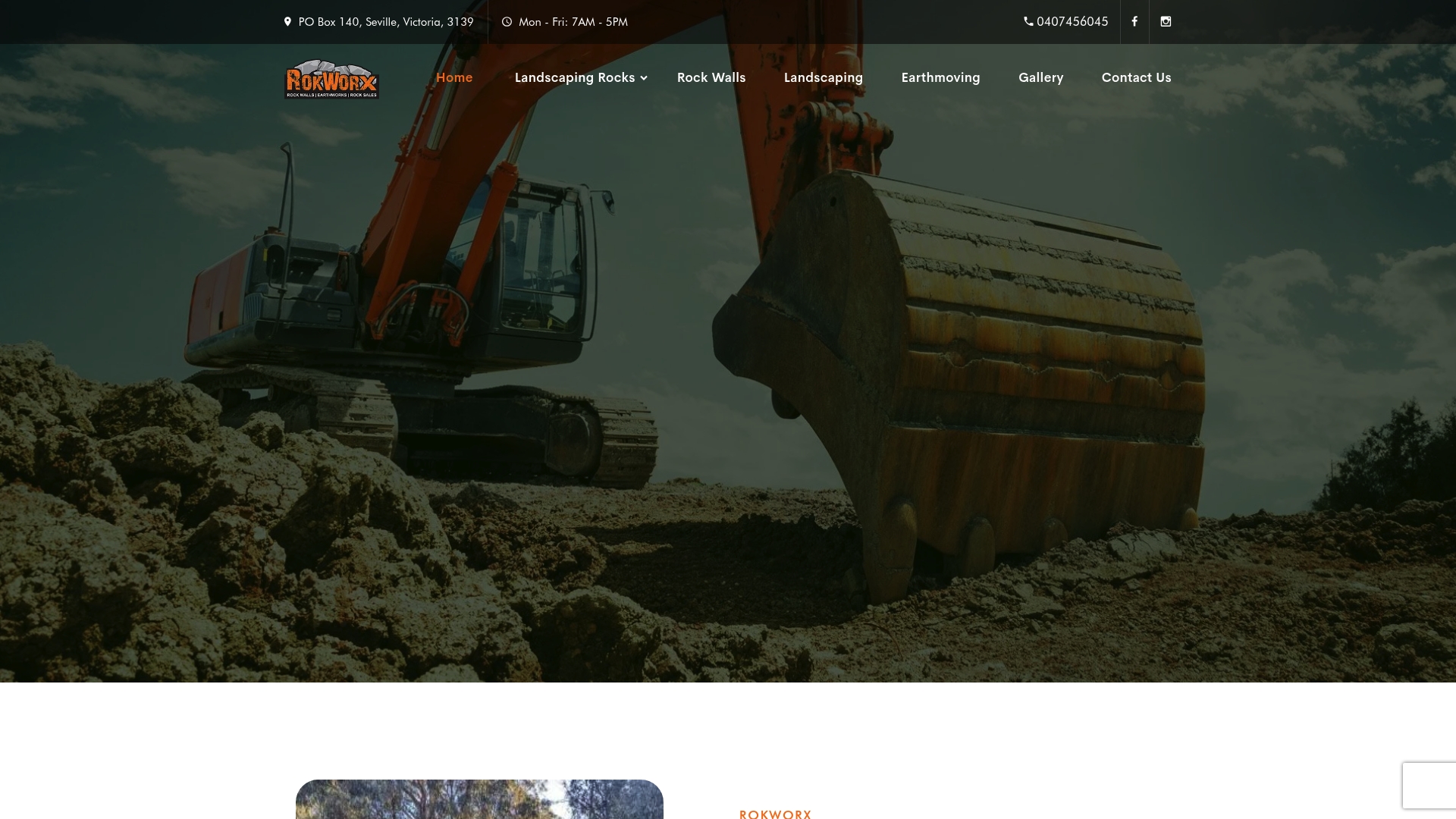
To get a fast, accurate quote, send through access photos, the rough scope of work, and your preferred timing when you request a site visit. A responsible contractor prepares a SWMS for regulated work and follows erosion and sediment control guidance on every site, so the compliance side is handled alongside the digging.
Where to check the rules and current pricing
For the rules themselves, see WorkSafe Queensland’s excavation guidance and erosion and sediment control guidelines. For current rates, The Quote Yard tracks hourly and per-cubic-meter pricing.
Sources
- Excavation safety guidance | WorkSafe Queensland
- Excavation & earthmoving QLD 2026 | The Quote Yard
- Guidelines for erosion and sediment control on building sites
FAQ
What is the best tool for loosening soil for planting?
For small garden beds, a hand tiller or fork loosens soil well enough for planting. For anything larger than a single bed, a mini excavator or compact tiller attachment covers the ground faster without the physical strain.
Is earthworks the same as earthmoving?
The two terms are largely interchangeable in residential landscaping, both describing cutting, filling, grading, and moving soil or rock. Formal standards such as AS 3798 describe “earthworks” as the broader technical process, including compaction and testing.
What is the average cost of excavation per cubic meter in Australia?
Pricing varies by machine size and site access, but recent guidance puts spoil disposal at $40 to $80 per cubic meter, with site cuts and pool excavations priced as separate project ranges rather than a flat per-cubic-meter rate. Rock breaking adds a further cost on top of these figures.
What are examples of earth moving equipment?
Common examples include mini excavators for tight access, skid steers or bobcats for loading and leveling, and 12-tonne excavators or small dozers for bulk cut-and-fill work. Attachments such as rock breakers, augers, and compactors extend what each machine can handle on a landscaping site.


7 Comments
imperiumvans
Own the Road. Command the Water
papageienparadies
Europas Premium-Papageien aus Hausaufzucht 🦜
ragsiamglanz
Ragdoll-, Siam- & Ragamese-Kätzchen europaweit🐱
schaeferhundblutlinien
Reinrassige Deutsche Schäferhundwelpen europaweit verfügbar 🐕🦺
shihtzulieblinge
Reinrassige Shih-Tzu-Welpen europaweit adoptieren🐶
jilicocasinologin
I had some trouble logging in at first but once I got in, the games were amazing. The Jili slots are always my favorite for the big wins. jilicocasinologin
krcasinowinoui
The winning streaks here are insane. I managed to hit a big jackpot last night and the withdrawal was processed instantly. High praise for krcasinowinoui