

Fence line clearing for routine maintenance is generally permitted across Australia, but new fences and larger clearing jobs almost always trigger state or council rules you need to check first. Before you touch a chainsaw, confirm your state’s clearing limits (South Australia caps most fence clearing at a limited distance typically up to 5 meters), locate underground services, and mark the line. Skip that step and you risk fines, damaged wire, or a call to explain yourself to a compliance officer.
TL;DR:
- Landscaping and clearing for new fences require checking specific state restrictions and obtaining permits or notifications if beyond routine maintenance limits.
- In South Australia, you can clear up to 5 meters on each side of a boundary fence without approval, but crossing into road reserves or native vegetation may require council consent.
- Using the correct tools matched to vegetation density, such as chainsaws, mulchers, or herbicides, can optimize time and safety during fence line clearing.
- Professional clearance is recommended on steep, rocky, or heritage-sensitive sites to avoid damage, legal issues, or costly rework, especially when regulations are complex.
- A site assessment from a qualified contractor helps estimate duration and cost, particularly for dense, long, or difficult fence corridors, avoiding surprises and ensuring compliance.
Table of Contents
- What Approvals Do You Need Before Clearing a Fence Line?
- How Do You Clear a Fence Line Step by Step?
- Which Tools Work Best for Clearing Brush From a Fence?
- What Safety and Environmental Rules Apply?
- What Does Fence Line Clearing Cost and How Long Does It Take?
- How Rokworx Approaches Fence Line Clearing
- When Should You DIY vs. Call a Professional?
- Get a Site Assessment for Your Fence Line Clearing Project
- Sources
- FAQ
What Approvals Do You Need Before Clearing a Fence Line?
Maintenance clearing on an existing fence line and clearing for a brand-new fence get treated very differently under most state rules. Trimming regrowth off a fence that’s stood for twenty years rarely needs a permit. Cutting a fresh corridor through native vegetation for a new boundary fence is a different matter entirely, and that’s where landowners get caught out.
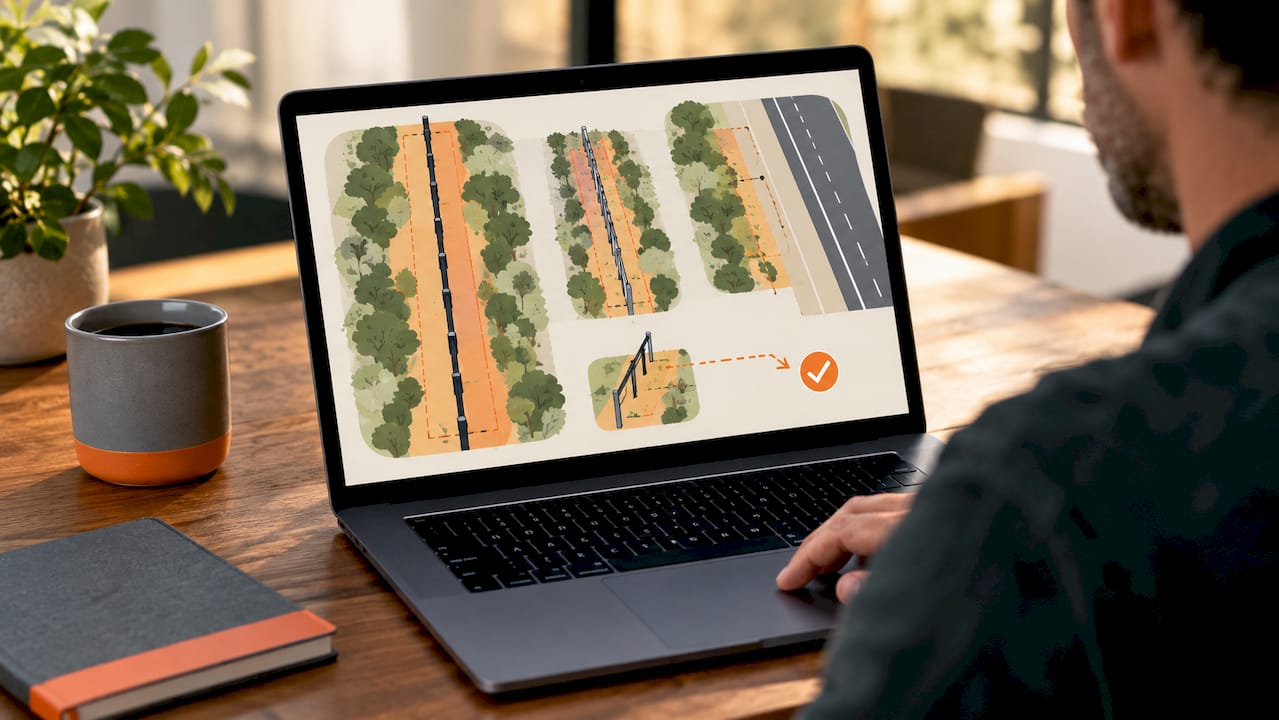
South Australia sets a clear benchmark. You can clear up to a specified distance on either side of a boundary fence (about 5 meters per side) without formal approval, or a smaller total clearance for internal fences, as long as you stay within the Native Vegetation Regulations 2017. Push into a road reserve and that allowance drops to a smaller distance, usually allowed only with council permission. Establishing a brand-new fence line also requires notifying the Native Vegetation Council before you start.
New South Wales runs its own system through the Rural Boundary Clearing Code, which sets specific distances depending on your land classification and vegetation type. Rather than guessing, use the Rural Boundary Clearing Tool to check whether the code applies to your property and what distance limits you’re working with.
A few triggers almost always mean you need permission or notification, regardless of state:
- Clearing that extends into a road reserve or crown land
- Land with known Aboriginal heritage sites or protected vegetation
- Large native trees that don’t actually block fence access or maintenance
- Any clearing beyond the standard distance allowances for your council area
Before you start, put together a short file: a copy of your property plan, written consent from any co-owner or neighbor sharing the boundary, dated photos of the current fence line, and the phone number for your council’s planning or environment desk. That file turns a five-minute phone call into an approval instead of a week of back-and-forth.
How Do You Clear a Fence Line Step by Step?
Once you’ve confirmed the rules apply to you, the actual clearing follows a fairly predictable order. Skip a step and you’ll end up redoing work, or worse, catching a hidden wire with a mower blade.
- Confirm the rules and locate services. Check your state’s clearing limits and get underground services marked before anything else. Buried power, water, or telecommunications lines near old fence posts are a real risk, and locating them first is non-negotiable.
- Document the existing line. Photograph the fence, note post condition, and record any sections already down or leaning.
- Mark the corridor. Flag the fence line and plan how machinery, if you’re using it, will get in and out without straying onto a neighbor’s property.
- Clear in two passes for overgrown or buried fences. Work one side of the fence first, parallel to the line, to expose the wire without crossing it. Then repeat on the second side. This two-pass method is standard among professional operators because it stops equipment from snagging wire it can’t see.
- Do the final trim. Once wire and posts are visible, tidy up loose growth, low branches, and anything that will regrow into the corridor within a season.
- Handle debris. Mulch it in place, haul it off site, or burn it if local rules and fire season conditions allow.
- Inspect and record. Check post stability, wire tension, and any bare ground that could erode, then note the completion date for your own records.
Pro Tip: Walk the line with a phone camera before and after clearing. If a council officer or neighbor ever questions how much you removed, dated photos settle the argument faster than an argument does.
Which Tools Work Best for Clearing Brush From a Fence?
The right tool depends on density, access, and how much regrowth you’re dealing with. Matching the tool to the job saves both time and money.
- Chainsaws and brushcutters suit selective work, tight corridors, and situations where you want to protect specific trees or shrubs near the line.
- Mulchers and skid steers handle longer runs of dense regrowth fast, chewing through scrub without leaving windrows of debris to deal with later.
- Excavators fitted with brush attachments work well on established fence lines choked with woody weeds or lantana, where hand tools would take days.
- Herbicide is worth considering for long-term suppression along fence lines prone to fast regrowth, but check product labels and state restrictions first. Chemical drift near waterways or neighboring crops carries real legal exposure.
Narrow corridors and steep or rocky ground often rule out full-size machinery. That’s where tight-access excavation techniques and smaller specialist attachments earn their keep, letting operators work a fence line without tearing up everything around it.
What Safety and Environmental Rules Apply?
Fence line clearing sits right at the intersection of fire management and vegetation protection, and cutting corners on either front creates real liability.
Reducing fuel load along boundaries is one of the most common reasons landholders clear in the first place, and it’s worth coordinating with your local fire authority before a big clearing push, particularly ahead of fire season. The Rural Boundary Clearing Tool doubles as a resource for understanding defendable space requirements, not just boundary distances.
- Stop work immediately if you uncover artifacts, scarred trees, or anything suggesting Aboriginal heritage, and contact the relevant state heritage body before continuing.
- Avoid clearing wide bare strips on sloped ground. Leave low groundcover or lay mulch to stop erosion once the canopy is gone.
- Keep a clear exclusion zone around anyone operating machinery, and have a second person on site as a spotter for chainsaw or mulcher work.
- Carry basic PPE (eye protection, hearing protection, chaps or leg protection for chainsaw work) as standard, not optional.
South Australia’s own guidance notes that large native trees not actually obstructing access or maintenance generally shouldn’t be cleared, even within your allowed distance. Landholders sometimes assume the full 5-meter allowance is automatic clearance to remove everything in that zone. It isn’t.
What Does Fence Line Clearing Cost and How Long Does It Take?
Cost and timeline swing on a handful of variables, and getting a rough sense of them before you call a contractor saves you from sticker shock or an underquoted job.
- Length and density drive the biggest swing in price. A short run of light regrowth costs a fraction of a long, overgrown boundary choked with woody weeds.
- Access matters almost as much. Machinery that can drive straight along the corridor is cheaper than a site needing hand clearing or small specialist gear.
- Debris disposal adds cost fast if you’re hauling material off site rather than mulching it in place.
- Permits, arborist reports, or heritage assessments add time and fees on top of the physical clearing work.
For rough scheduling: a short, light run typically takes half a day to a full day. Medium jobs with denser growth run one to two days. Long or complex boundaries, especially where herbicide follow-up is planned, can stretch into multi-day projects with a return visit weeks later. Hybrid clearing methods that combine targeted mechanical work with manual finishing can cut total project cost by 20 to 35 percent on Australian sites, mainly by reducing machine hours on sections that don’t need heavy equipment. For anything beyond a straightforward short run, an on-site quote beats a phone estimate every time.
How Rokworx Approaches Fence Line Clearing
A professional land clearing, earthmoving, and tight-access excavation service can handle fence corridors, which often combine all three. A fence line rarely needs the same treatment end to end. Some sections are a straightforward brushcutter job, others need an excavator with a brush attachment, and a few tight or rocky stretches call for tight-access equipment that a standard skid steer can’t maneuver into.
That’s the logic behind a hybrid approach: mechanical clearing for the bulk of the run, manual finishing where precision matters, and debris handling planned in from the start rather than left as an afterthought.
- Targeted mechanical clearing for dense or long fence corridors
- Manual finishing near retained trees, heritage areas, or tight boundary sections
- Debris removal or mulching handled as part of the same job
- Tight-access techniques for narrow or steep sites standard equipment can’t reach
Hiring a professional makes the most sense on steep or rocky ground, near heritage sites, or anywhere the legal exposure of getting it wrong outweighs the cost of getting it done right the first time; for reliable fencing work in these areas, consider checking local Melbourne service areas and professional support.
When Should You DIY vs. Call a Professional?
If your fence line is flat, accessible, and the growth is light, a weekend with a brushcutter and a ute for debris is a reasonable DIY job. The math changes fast on steep ground, dense regrowth, or anywhere heritage or native vegetation rules add legal weight to a mistake. In those cases, a professional quote often costs less than the fines or rework that follow a bad guess. Whichever route you take, check your local clearing rules and get underground services located before the first cut.
— MYBMC
Get a Site Assessment for Your Fence Line Clearing Project
Clearing a fence line yourself works fine for a short, flat, low-density run. Once you’re dealing with steep ground, heavy regrowth, or a boundary long enough that DIY turns into a multi-weekend project, a hybrid clearing approach that uses targeted mechanical work can reduce labor time on sections that don’t need it.

Rokworx handles land clearing for storm damage cleanups and property boundary work across Melbourne, alongside earthmoving, tight-access excavation, and rock wall construction for landowners who need more than just a cleared line. A quote typically starts with a site visit to assess density, access, and disposal needs, followed by a scope and timeline you can compare against a DIY estimate. If your fence line project might also involve a new retaining wall once the corridor is clear, browse rock wall ideas while you’re planning. Request a site assessment through a professional service to get a real number instead of a guess.
Sources
- Fences: maintain existing or establish a new fence
- Rural Boundary Clearing Tool
- Native Vegetation Regulations 2017 (SA)
FAQ
Can I Clear Fence Lines in NSW Without a Permit?
Maintenance clearing on an existing fence line is generally allowed, but new clearing near boundaries is governed by the Rural Boundary Clearing Code. Check the Rural Boundary Clearing Tool to confirm the distance limits that apply to your property.
What Are the Requirements for Clearing Fence Lines in Queensland?
Queensland regulates clearing under its own vegetation management framework, and requirements vary by land category and vegetation type. Contact your local council or the state’s vegetation management authority before clearing beyond routine maintenance.
What Are the Current Clearing Laws in Queensland?
Queensland’s vegetation management rules set out specific exemptions and permit pathways depending on whether land is freehold, leasehold, or protected. Because these categories directly affect what you can clear without approval, verify your property’s classification with the relevant state department before starting work.
Is There an Online Tool for Rural Boundary Clearing in NSW?
Yes. The Rural Boundary Clearing Tool lets landholders check whether the Rural Boundary Clearing Code applies to their property and what clearing distances are permitted.
How Much Vegetation Can I Clear Along a Fence Line in South Australia?
South Australia permits up to 5 meters on either side of a boundary fence (10 meters total) or 5 meters total for internal fences, without formal approval, provided you meet the conditions in the Native Vegetation Regulations 2017.


8 Comments
brbet959win
Great odds and fast payouts. I had a few questions and the support team handled them quickly. If you want a winning streak try brbet959win.
imperiumvans
Own the Road. Command the Water
reliefmedspharma
Order Pure Molecule relief Meds Canada ✅
gunnersmart
Buy Sophisticated Hand Guns Now
puremoleculelabs
https://puremoleculelabs.com Molecular Labs
ketamight
https://ketamight.com – Order Ketamine
champion-bulldoggen
Champion-Europäische Bulldoggenwelpen zur Adoption
taktikwacht
Kaufen Sie diskret die besten Handfeuerwaffen in Europa