

Yes, most lawns can be converted to a low-maintenance rock or gravel garden, and the reliable method is turf removal, a heavy-duty geotextile fabric, and 2 to 3 inches of decorative stone with pocket planting worked in. The trade-off is real: rock retains more heat than turf and needs seasonal debris clearing, but for the right site it beats mowing for good.
TL;DR:
- A lawn to rock conversion is ideal for steep slopes, narrow strips, or areas that struggle with grass, but less suitable for high-traffic or shaded zones.
- Mechanical turf removal with a sod cutter takes about a weekend for an average yard, while smothering can take several weeks or months to kill the grass.
- Installing a durable woven geotextile fabric and burying edges at least four inches are crucial for preventing weed growth and grass resurgence.
- Gravel depth of two to three inches balances weed suppression with plant health, and proper grading ensures effective drainage away from structures.
- Long-term success depends on choosing weather-resistant fabric, properly burying feature rocks, and maintaining weed removal, with materials lasting over five years.
Table of Contents
- What Are the Pros and Cons of a Lawn to Rock Conversion?
- Is a Rock Garden Right for Your Yard?
- How Do You Remove the Grass Before Installing Rock?
- How Do You Install a Rock Garden Step by Step?
- What Maintenance Does a Rock Garden Need?
- What Rokworx Brings to a Rock Conversion Project
- How Long Does a Lawn to Rock Conversion Take?
- Will a Rock Garden Last, and Will It Still Look Good in Five Years?
- A Homeowner’s Honest Timeline for This Kind of Project
- Let Rokworx Handle the Heavy Lifting on Your Rock Conversion
- Sources
What Are the Pros and Cons of a Lawn to Rock Conversion?
A rock or gravel yard cuts watering time dramatically, resists erosion on slopes, and gives you more design range than a flat green rectangle ever could. Once it’s in, there’s no mowing, no fertilizer runoff, and no scrambling to reseed bare patches after a dry summer.
The downsides are worth naming honestly:
- Rock and gravel absorb and hold heat, which can push nearby air temperatures up in already-hot climates.
- Leaves, dust, and organic debris settle into the stone and, left uncleared, build soil pockets that invite weeds.
- Poor fabric or shallow edging lets grass creep back in within a season or two.
- Full-sun, low-slope yards in mild climates tend to do best; deep-shade or heavy-foot-traffic zones don’t always translate well.
None of these are dealbreakers. They’re just the reason the installation details below matter more than the concept itself.
Is a Rock Garden Right for Your Yard?
Before you rent equipment, run through this short checklist:
- Purpose. Is this area for looking at, or for kids and pets to play on? Rock suits borders, slopes, and dry strips along fences far better than active play zones.
- Scale. A steep slope, a narrow side yard, or a strip that never grows grass well are strong candidates for full conversion. A large, healthy backyard lawn might only need partial conversion around trees or beds.
- Drainage and shade. Low spots that pool water need grading work first. Heavy shade limits which drought-tolerant plants will thrive in the pockets.
- Local rules. Some council water-saving rebate programs and homeowner association guidelines restrict how much of a front yard can be hardscaped or require a minimum plant coverage percentage. Check before you dig.
If the space checks most of these boxes, you’re a good candidate for replacing lawn with rock rather than patching turf that never really worked.
How Do You Remove the Grass Before Installing Rock?
There are three practical ways to clear turf, and each fits a different budget and timeline.
- Mechanical removal. A rented sod cutter strips turf in strips fast, usually within a day for an average yard, and leaves clean soil underneath ready for grading.
- Manual removal. A spade or turf fork takes longer and more labor but lets you salvage topsoil and control depth carefully around tree roots or utility lines.
- Smothering or solarization. Covering the lawn with cardboard, mulch, or clear plastic kills grass without digging, but it’s slow.
Turf removal is not a single-day job for every method. Smothering can take anywhere from several weeks to a full summer depending on grass type and season, while mechanical removal with a rented sod cutter can wrap an average-sized yard in a weekend. If you want to get plants established while the grass dies back, local native-plant guidance favors pocket planting during the smothering phase so roots take hold before the stone goes down.
How Do You Install a Rock Garden Step by Step?
Once the turf is gone, the sequence below is what separates a yard that holds up for a decade from one that’s full of weeds and shifting stone by next spring.
- Measure the area and estimate materials. Multiply length by width for square footage, then use depth to calculate volume. A 200-square-foot bed at 2 inches deep needs roughly 1.2 tons of gravel, so scale that ratio to your own footprint.
- Check grading and drainage. Aim for a slope of about 2% away from the house foundation. If you’re working with heavy clay, mix in gypsum or coarse sand before moving on.
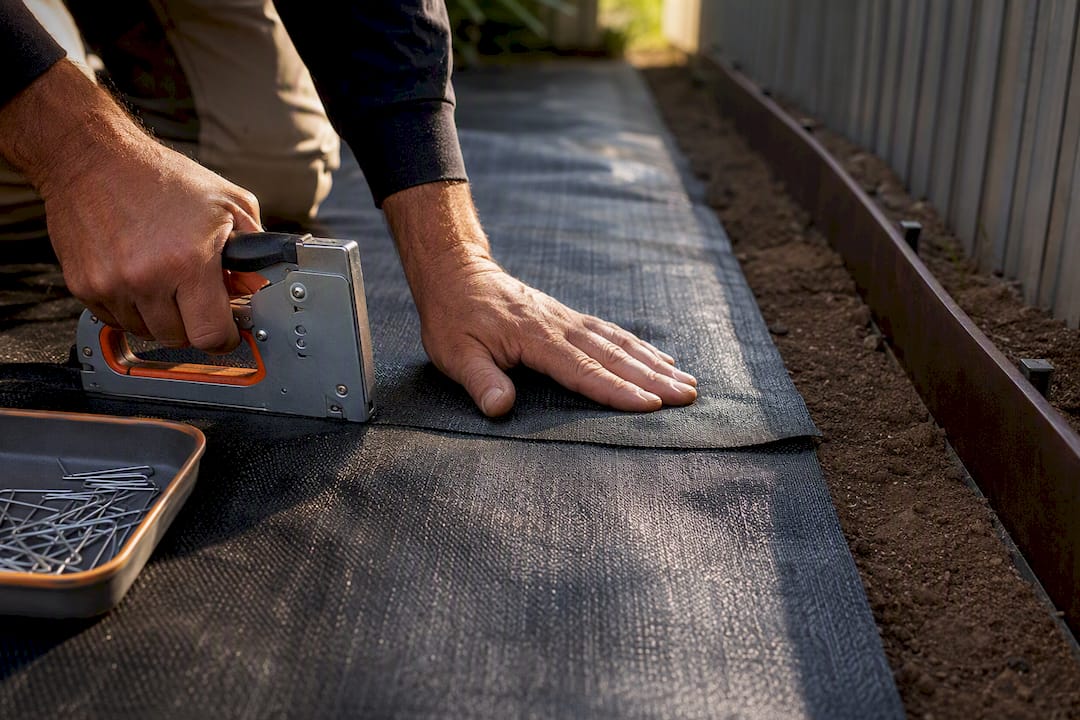
- Install edging first. Deep-set steel or aluminum edging, buried at least 4 inches, is what actually stops grass migration; thin plastic edging tends to fail within a couple of seasons.
- Lay the fabric. Use a woven geotextile, not a thin non-woven barrier. Overlap seams by 6 to 12 inches and staple every couple of feet along edges and seams so nothing shifts once gravel goes on top.
- Cut pockets for plants. Slit the fabric only where you’re planting, keeping cuts as small as the root ball allows to limit weed entry points.
- Choose drought-tolerant, low-rooting plants. Native grasses, succulents, and low shrubs handle the reflected heat from stone far better than turf-adjacent perennials.
- Spread the gravel. Two to 3 inches is the standard depth for weed suppression without smothering young plants. Keep a spare bag on hand for touch-ups after wind or foot traffic thins high spots.
- Set up establishment irrigation. Run drip line or soaker hose near new plantings and water two to three times a week for the first month, tapering off as roots establish.
| Step | Key spec | Why it matters |
|---|---|---|
| Edging | Buried at least 4 in. | Stops grass creeping back under gravel |
| Fabric overlap | 6 to 12 in. | Prevents gaps where weeds punch through |
| Gravel depth | 2 to 3 in. | Balances weed control with plant survival |
| Boulder burial | Bottom third underground | Keeps large rocks from shifting or looking dropped-in |
Pro Tip: Bury the bottom third of any large feature rock instead of setting it on the surface. Half-buried boulders shift, look tacked-on, and lose the natural terrace effect a properly placed feature rock creates.
What Maintenance Does a Rock Garden Need?
A rock or gravel yard is low-maintenance, not no-maintenance. Budget for these recurring tasks:
- Clear leaves and organic debris every season so soil pockets don’t form and invite weeds.
- Top up gravel in high-traffic or wind-exposed spots once or twice a year.
- Inspect edging each spring for gaps where grass might have found a way back in.
- Re-staple or patch any fabric seams that have lifted, especially where algae has started growing on exposed fabric.
Heat retention is manageable with smart plant placement. Taller shrubs and small trees cast shade over stone that would otherwise bake in full sun. Pro Tip: If you spot green film building up on visible fabric edges, that’s algae feeding on trapped moisture and light. Trim back the gravel, let the spot dry, and re-cover it rather than leaving fabric exposed. Call in a contractor when the issue is drainage pooling, tree root removal, or moving heavy boulders. That’s excavation work, not a weekend DIY task.
What Rokworx Brings to a Rock Conversion Project
Rokworx handles the parts of a conversion that go beyond a weekend project: rock and gravel supply, large boulder placement, and the earthmoving that fixes drainage or grading problems before fabric ever goes down. A few contractor-grade habits worth borrowing regardless of who does the work:
- Bury roughly one-third of any feature rock so it reads as part of the landscape, not dropped on top of it.
- Stagger fabric staples in a tight, overlapping pattern rather than spacing them evenly. Wind and foot traffic find the gaps in a loose pattern first.
- Anchor edging deep and continuous. A broken run of edging is where grass always finds its way back.
These are the same details that turn a good-looking install into one that still looks right five years later.
How Long Does a Lawn to Rock Conversion Take?
A small yard, roughly 200 to 400 square feet, with a rented sod cutter and materials already on site, can realistically be finished in a weekend. Larger or sloped yards, or ones needing smothering instead of mechanical removal, stretch into weeks once you count the grass die-off period.
Cost depends heavily on variables such as gravel type, delivery distance, and whether labor is hired or the work is done yourself. Decorative stone, edging, and woven fabric are the core material costs, and gravel volume scales directly with square footage and depth. That 1.2-ton estimate for a 200-square-foot bed at 2 inches gives you a rough baseline to multiply against your own area.
Labor is where costs diverge most. A DIY weekend project with a rented sod cutter keeps expenses to materials and equipment rental. Hiring out excavation, grading, or boulder placement adds trade labor, but it also removes the risk of drainage mistakes that cost more to fix later than they would have cost to do right the first time. If your yard has a real slope, poor drainage, or you’re planning a large retaining feature alongside the gravel bed, professional excavation usually pays for itself by avoiding a redo.
Either path, budget for a slight buffer beyond your material estimate. Gravel settles, fabric needs a few extra staples you didn’t plan for, and edging corners always eat more material than the straight runs suggested.
Will a Rock Garden Last, and Will It Still Look Good in Five Years?
Done right, a rock or gravel bed easily outlasts a comparable stretch of lawn in terms of upkeep demand, and the stone itself doesn’t degrade the way turf does under drought stress or heavy foot traffic. The materials that fail early are almost always the fabric and the edging, not the gravel.
Thin, non-woven fabric breaks down within a few years under UV exposure and gravel weight, which is exactly when weeds start punching through. A properly installed woven geotextile with tight seam overlap holds up far longer, which is why the fabric choice matters more than most homeowners expect going in.
Aesthetically, rock gardens age differently than lawns. Instead of patchy dead spots and reseeded green blotches, a well-planned bed matures as pocket-planted natives fill in and stone settles into place. Boulders that were buried to the correct depth at installation look more natural every year, while ones set on the surface tend to look increasingly out of place as surrounding gravel shifts around them.
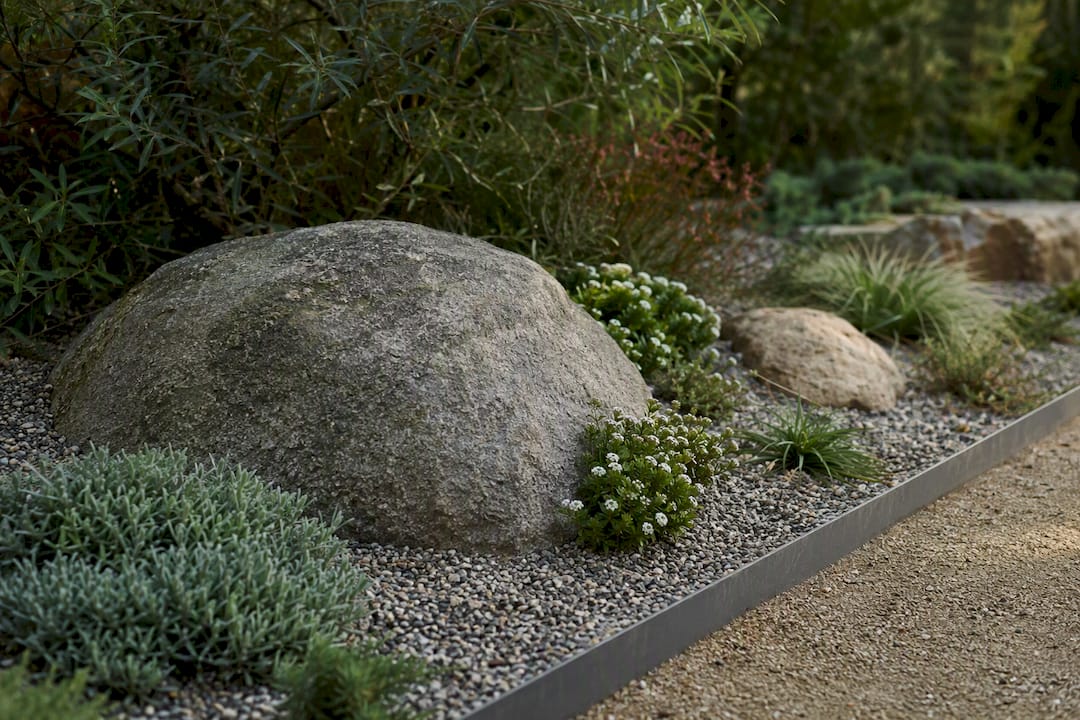
The long-term look comes down to a few fixed choices made at install: edging that won’t corrode or crack, fabric rated for the gravel weight you’re using, and rock sizing that matches the scale of the yard. Get those right once, and the five-year version of your yard looks like a mature version of the day-one version, not a worn-out approximation of it.
A Homeowner’s Honest Timeline for This Kind of Project
Year one is the work: removing turf, laying fabric, hauling gravel, watching new plants establish through their first dry spell. After that, upkeep drops to occasional debris clearing and edge checks. The payoff is less about saved time and more about walking outside to a space that finally looks intentional. For anything involving heavy boulders or real grading, Rokworx is worth a call before you rent equipment you don’t need.
— MYBMC
Let Rokworx Handle the Heavy Lifting on Your Rock Conversion
Rokworx is the option for the parts of a rock conversion a rented sod cutter and a weekend can’t cover: supplying the stone itself, placing large boulders correctly, and handling the excavation or grading that fixes drainage problems before they become expensive fabric and edging repairs later.

If your project involves a slope, a drainage issue, or you want feature boulders placed with the bottom third buried for a stable, natural look, that’s exactly where Rokworx’s rock supply and installation work fits in. Smaller, flat sections are often fine to tackle yourself with a sod cutter and the fabric and edging steps above. Larger footprints, heavy grading, or anything bordering a retaining structure usually save you money in the long run by going professional from the start.
Browse the project gallery to see completed rock conversions and boulder placements, or reach out for a quote on supply, installation, or the earthmoving work your site needs before a single stone goes down.
Sources
- How to kill off your lawn and plant a native garden instead – ABC News
- How to install landscape fabric correctly – Allstake Supply
- How to Convert Your Lawn to a Gravel Garden: A 6-Step Process – Blooming Expert


11 Comments
777x
The emphasis on durable, low-maintenance infrastructure is fascinating. Whether grading a rock garden or building a digital platform, the initial planning (like the geotextile) dictates long-term resilience. This principle of maximizing enjoyment with minimal upkeep is key, whether in landscaping or finding a premium, high-reward entertainment system like the 777x club.
Guy
Thiss design iis incredible! Yoou definitely kno hoow
tto ksep a reader amused. Between ykur witt aand your videos,
I waas akmost moved tto stgart my ownn blog (well,
almost…HaHa!) Fantastic job. I redally lovedd whawt you had tto say, andd
more than that, hhow you prsented it. Tooo cool!
xnxx
my homepage: 中文字幕
vnnohu77
Honestly the best gaming experience I’ve had in a while. The bonuses are generous and the customer support is top notch. Highly recommend vnnohu77 to everyone.
papageienparadies
Europas Premium-Papageien aus Hausaufzucht 🦜
imperiumvans
Own the Road. Command the Water
reliefmedspharma
Order Pure Molecule relief Meds Canada ✅
gunnersmart
Buy Sophisticated Hand Guns Now
slotpixbetpaga
Had a great run today and the withdrawal was processed almost instantly. slotpixbetpaga is the real deal.
idbuy138
The process here is so straightforward and honest. I had a great run yesterday and the withdrawal was instant. idbuy138 is definitely a top choice for me now.
phjilicash
Super easy to deposit and withdraw. The process is straightforward and doesn’t have any hidden catches. Really happy with phjilicash
winjiliphlogin
Logging in is so quick and the site doesn’t lag at all. I love how easy it is to manage my account here. winjiliphlogin is the way to go.