

To prepare for rock delivery, measure and order the correct volume, clear and protect a firm drop zone, and confirm truck access with your supplier, then verify the load on arrival. Check that your site can handle a standard delivery truck, which typically needs about 12 feet of width and 14 feet of height clearance, plus ground that is firm enough to support the load.
TL;DR:
- Most delivery issues can be avoided by confirming order details and site conditions at least a few days before the scheduled delivery.
- Standard trucks require at least 12 feet of width and 14 feet of height clearance, with firm ground support, to access typical drop zones safely.
- Accurate volume measurement is crucial; order about 10-15% extra to account for compaction, waste, and uneven ground.
- Inspect the load on-site immediately after delivery to prevent disputes over incorrect or short shipments, ideally before signing any receipt.
- Homeowners can typically manage small projects, but large or complex deliveries should involve professional earthmoving support to avoid driveway damage and access problems.
Table of Contents
- Rock Delivery Checklist for the Week Before Drop-Off
- How Much Rock Should You Order?
- Can a Delivery Truck Actually Reach Your Drop Zone?
- Choosing and Protecting Your Drop Zone
- What to Expect From Delivery Scheduling and Truck Types
- When the Truck Arrives: How to Inspect and Verify Your Load
- What to Do With the Rock After It’s Delivered
- Rokworx Tips: When to Handle It Yourself and When to Call a Pro
- A Field Pro’s Quick Warnings Before You Order
- How Rokworx Makes Rock Delivery Easier
- Sources
- FAQ
Rock Delivery Checklist for the Week Before Drop-Off
Most delivery problems trace back to something that could have been fixed with a five-minute phone call days earlier. Work through this in the days before your truck shows up.
A few days out:
- Confirm your order quantity, material, and delivery date in writing with your supplier.
- Walk your delivery route and note any gates, low branches, or narrow turns.
- Move cars, trailers, bins, and toys out of the driveway and drop zone.
The day before or morning of:
- Mark the exact drop zone with stakes, spray paint, or cones.
- Lay down plywood or tarps over any surface you want to protect.
- Set aside a wheelbarrow, shovel, rake, and tamper for spreading later.
- Have your phone charged for photos and your gate code or contact number ready to text the driver.
Give the supplier a rough site description, including any tight spots, before the truck leaves the yard. A quick photo sent ahead saves everyone a wasted trip.
How Much Rock Should You Order?
Get the math wrong and you either run short mid-project or pay to haul away a pile you didn’t need. Start by measuring the length and width of the area in feet, then multiply by your planned depth in feet (2-inch is roughly 0.17 feet, 3 inches is 0.25 feet) to get cubic feet. Divide by 27 to convert to cubic yards.
As a rough rule, one ton of stone covers about 100 square feet at a 2 inch depth, though this shifts depending on the density of the stone you choose. Compaction, uneven ground, and simple waste eat into your coverage faster than most people expect.
Match the format to the job size:
- Bagged or 16 to 64 ounce sample packs for testing color and texture before committing to a full order.
- Supersacks (1,000 to 2,000 pounds) for small beds, borders, or tight-access properties.
- Loose bulk delivery for driveways, large beds, or full-yard projects.
If you’re unsure about color or size, order a sample first. It costs far less than redoing a bed full of the wrong stone.
Can a Delivery Truck Actually Reach Your Drop Zone?
Before you finalize anything, walk your property the way the truck will. Measure the narrowest point between your street and the drop zone, and check overhead clearance under trees, wires, or carports.
Standard rock delivery trucks generally need at least 12 feet of width and 14 feet of height clearance to maneuver safely, and the ground has to support a fully loaded vehicle that can weigh 40,000 pounds or more. Soft lawns, steep driveways, and tight turns are the three most common reasons a truck can’t get where you need it.
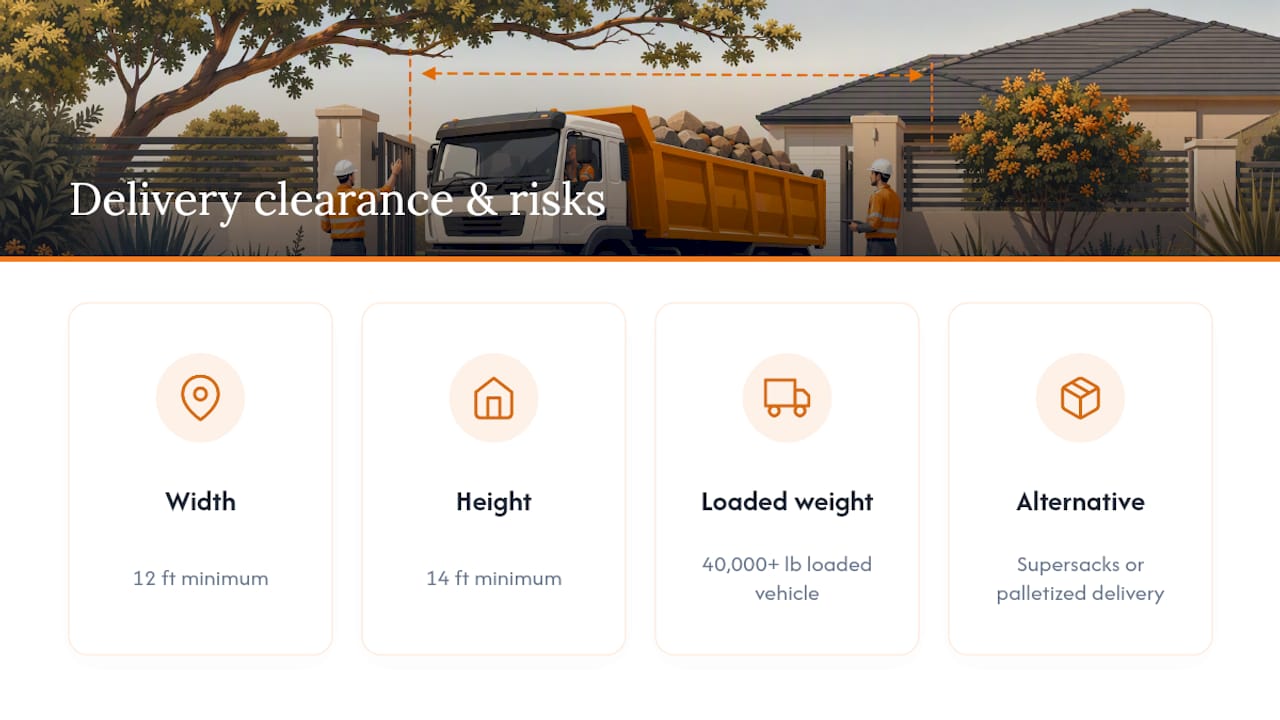
Look for pinch points: gate posts, mailbox clusters, parked cars on the street, and low tree limbs. If your access is marginal, ask about using supersacks or palletized delivery placed near the driveway instead of a full bulk dump.
Pro Tip: If your soil is soft or your driveway hasn’t been rated for heavy vehicles, lay down plywood or temporary trackway boards along the truck’s path, not just at the drop zone. A truck can sink a wheel rut fifty feet from where you’re worried about it.
When in doubt, call the supplier and describe the access honestly. Requesting a smaller truck upfront is far cheaper than a driver turning around mid delivery.
Choosing and Protecting Your Drop Zone
Pick a spot that’s firm, reasonably close to where the material will actually be used, and clear of septic lines, sprinkler heads, and buried utilities. Dumping fifty feet from where you’ll spread the rock means fifty extra feet of wheelbarrow trips, so plan for convenience, not just convenience for the truck.
Protect anything you can’t afford to replace:
- Lay plywood sheets over concrete or asphalt to prevent chips and cracks from heavy tandem-axle trucks.
- Use tarps under the drop zone itself to make cleanup and any leftover material easier to scoop up.
- Stake or paint the boundary clearly so the driver knows exactly where the load should land.
A prepared protection layer is a cheap insurance policy. Recracked concrete or a rutted lawn costs far more to fix than a few sheets of plywood cost to buy, and a driveway erosion problem after a heavy truck crossing is one of the more preventable landscaping headaches homeowners run into. Tell the driver your placement instructions directly, don’t assume they’ll guess where you want the pile.
What to Expect From Delivery Scheduling and Truck Types
Plan your project timeline around real supplier lead times, not wishful thinking. Most suppliers ask for 2 to 7 days of advance notice for standard orders, and that window can stretch to one or two weeks during spring and early summer when landscaping demand peaks.
What arrives depends on how you ordered:
- Bagged or sacked deliveries show up on a pallet, often dropped by a smaller truck or even hand-carried to your driveway.
- Bulk deliveries arrive by dump truck or tandem-axle truck, tipping the load directly into your marked zone.
Before the day arrives, ask your supplier about extras you might not think to ask about: tailgate spreading service, tight-access surcharges, and any mileage or weekend delivery fees. Suppliers generally charge more for difficult access, so flagging constraints early avoids an unpleasant surprise on the invoice.
When the Truck Arrives: How to Inspect and Verify Your Load
The minutes right after the truck pulls away are your only real window to catch a problem while it’s still easy to fix. Work through this before you sign anything:
- Compare the delivered quantity and material type against your delivery ticket.
- Do a quick visual check on color, size grading, and consistency, especially if you ordered a specific decorative stone.
- Walk the pile and take photos from several angles, including a shot with the delivery ticket visible.
- Note any discrepancies directly on the receipt before you sign it.
- If the load is short or wrong, call your supplier immediately and reference your photos and receipt notes.
Industry practice leans hard on this one habit: inspect while the driver is still there. Once the truck leaves, a short load or a mismatched grade becomes a much harder claim to resolve, since there’s no independent witness to what actually landed on your property.
What to Do With the Rock After It’s Delivered
The pile in your driveway isn’t the finish line. Spread larger decorative rock with a rake and shovel, working from the edges of your marked bed inward. For gravel or crushed stone meant for a path or driveway base, a hand tamper or plate compactor gets you a firmer, longer-lasting surface, particularly if you’re layering it over a proper base material.
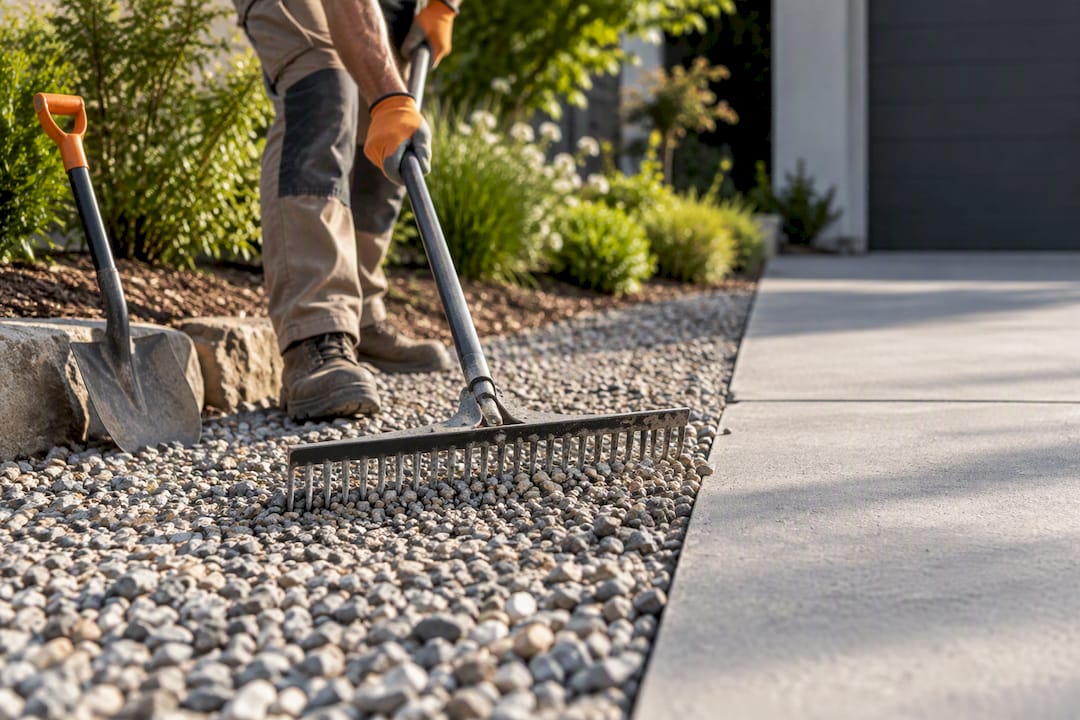
If you can’t spread everything the same day, cover the remaining pile with a tarp to keep it clean and prevent it from washing into gutters during rain. Keep it off bare soil if you plan to reuse it later, since grass and weeds root into a pile faster than most people expect.
For leftover material, you generally have three options: store it under cover for future use, ask your supplier about a return or credit policy, or offer it to a neighbor tackling their own project. Whatever you choose, sweep the drop zone and driveway edges before you call the job done. Loose gravel left on pavement is a slip hazard and a lawnmower’s worst enemy.
Rokworx Tips: When to Handle It Yourself and When to Call a Pro
A homeowner with a wide driveway and a small garden bed can usually manage a rock delivery solo. Generally, professional help is recommended once the project involves tight access, steep slopes, large tonnage, or any structural element like a retaining wall.
If your site has a narrow side gate, a sloped backyard, or you’re moving more than a few tons of material, earthmoving and excavation support often costs less than the driveway or lawn repairs that come from forcing a standard delivery truck into a space it can’t handle.
When you request a quote, come prepared with rough measurements of the area, a few photos of your access route and drop zone, and a clear idea of the finish you want, whether that’s decorative garden rock, driveway base, or a full retaining wall. That handful of details lets Rokworx give you a faster, more accurate estimate the first time.
A Field Pro’s Quick Warnings Before You Order
Two mistakes account for most of the calls we hear about after the fact. The first is a heavy truck cracking a driveway that was never rated for that weight. The second is under-ordering, which turns into a second delivery fee for what should’ve been one trip.
A five-point arrival checklist a pro runs through: confirm the order matches the ticket, check the drop zone is clear and marked, verify truck clearance one last time, protect any vulnerable surface, and have a camera ready before the tailgate opens.
— MYBMC
How Rokworx Makes Rock Delivery Easier
You can benefit from a streamlined process that includes access to quarry stock and a team that handles delivery logistics, truck sizing, and placement.
Whether you need landscaping rocks supplied and installed, a retaining wall built, or earthmoving work to prep a site that a standard truck can’t reach, Rokworx handles the parts homeowners find hardest to plan around, especially tight access and ground that can’t take a heavy vehicle. To get a quote moving quickly, send rough measurements of your space, a couple of photos of your driveway or access route, and a note on the finish you’re after. Request a site visit or a quote through Rokworx’s landscaping rock page and get a plan built around your actual property, not a generic estimate.
Sources
- Transport for NSW — Heavy vehicle safety guidance
- Complete Guide to Rock Delivery Services for Your Landscaping Project – Hello Gravel
- How Is Landscape Rock Delivered? – Earth Stone Rock
- A Bulk Rock Delivery Checklist for General Contractors — Columbia Quarry
FAQ
Do I Need to Put Sand Down Before Gravel?
Not always. Sand can help level small areas, but most driveways and paths need a compacted road base layer first, not sand, to prevent the gravel from sinking or shifting under weight.
What Should I Put Down Before Laying Gravel?
For paths and driveways, a compacted base layer, often crushed rock, provides drainage and stops your gravel from sinking into soft soil over time. For garden beds, landscape fabric under the gravel helps block weeds without affecting drainage.
How Does Rock Delivery Actually Work?
You place an order specifying material, volume, and format, then the supplier schedules a truck based on your access details. Most deliveries arrive within 2 to 7 business days, and the driver either dumps loose bulk material in your marked drop zone or drops bagged and palletized units depending on how you ordered.
What Should I Put Under a Gravel Driveway?
A gravel driveway needs a compacted base of crushed rock, typically several inches deep, to support vehicle weight and prevent ruts. Rokworx can advise on base depth and material based on your soil type and expected traffic through its crushed rock driveway guidance.
How Much Extra Rock Should I Order to Be Safe?
Order 10 to 15% more than your calculated volume to cover compaction, uneven ground, and minor waste during spreading. It’s cheaper to store a small leftover pile than to pay for a second delivery trip.


7 Comments
homeraisedparrots
Home Raised Parrots – Amazon Parrots Guide
pinballmarket
Premium Pinball,
Arcade & Foosball Machines Canada🚚
pomchipals
Tiny PomChi Puppies Ready for Loving Homes
euroketarelief
Eu Pharma
shihtzulieblinge
Reinrassige Shih-Tzu-Welpen europaweit adoptieren🐶
exotiershop
https://exotiershop.com/ Exotenwelt
96xbajeelogin
Finally found a reliable place to play. The login process at 96xbajeelogin is quick and I never have any issues accessing my account.